Claude Code gains auto-memory to persist context across sessions

Vercel warns agentic coding tools blur security boundaries
AI makes code cheap, but software still isn’t easy
In a newly published post, David Heinemeier Hansson revisits an Etsy rewrite that stalled for years, arguing the real work isn’t code—it’s the system around it. He connects today’s Claude Code moment to shifting team “social contracts” as output gets near-free.

Cursor cloud agents now run in VMs and ship PRs


Cursor cloud agents now run in VMs and ship PRs
Cursor has just rolled out an upgraded cloud agent system that runs each task in an isolated VM. The agents can build, test, and attach artifacts like videos and logs before opening merge-ready PRs. Cursor says over 30% of its merged PRs now come from these agents.
What ‘Codex’ Means Now: Model, Harness, and Surfaces explained
Introducing the Augmenter Newsletter
Get a curated digest of AI developer news, tutorials, and tools — delivered to your inbox. Designed for developers who want concise, useful updates.
News and Insights on Agentic Coding, Vibe Coding and more
Augmenter is a human-curated collection of AI news, insights, and resources for developers. Content is written with AI, reviewed by humans, and designed to keep you up to date as technology moves forward.
Personal Brain OS: A Git-based fix for AI context drift
Muratcan Koylan outlines “Personal Brain OS,” a Git-versioned folder structure that keeps AI assistants on track without bloated prompts. It uses modular files, progressive disclosure, and append-only logs to load only the context each task needs.
Cloudflare’s new MCP server shrinks AI tool context to 1,000 tokens
Cloudflare has just rolled out a new MCP server for its entire API, covering 2,500+ endpoints with just two tools: search() and execute(). The server-side “Code Mode” approach keeps context usage fixed and runs model-written code in a locked-down V8 sandbox.
Chris Lattner: Claude C Compiler shows AI’s new scale
Chris Lattner digs into Anthropic’s open-source Claude C Compiler as a real repo—not a demo. CCC shows AI can keep multi-subsystem architecture coherent, but also exposes test-driven shortcuts and fresh IP questions.
Claude Code Remote Control lets you keep coding from anywhere
Anthropic has rolled out Remote Control for Claude Code, letting you continue a local coding session from the web or your phone. It’s a research preview for Pro and Max users, keeping execution on your machine while syncing the conversation across devices.
Qwen debuts 3.5 Medium models with Flash and 1M context
Qwen has just rolled out its Qwen 3.5 Medium Model Series, featuring open-weight releases and a hosted Flash option built for production. Highlights include a 1M context window, built-in tools, and “medium” sizes aimed at local inference.
Featured Videos
Deep dive videos for AI developers
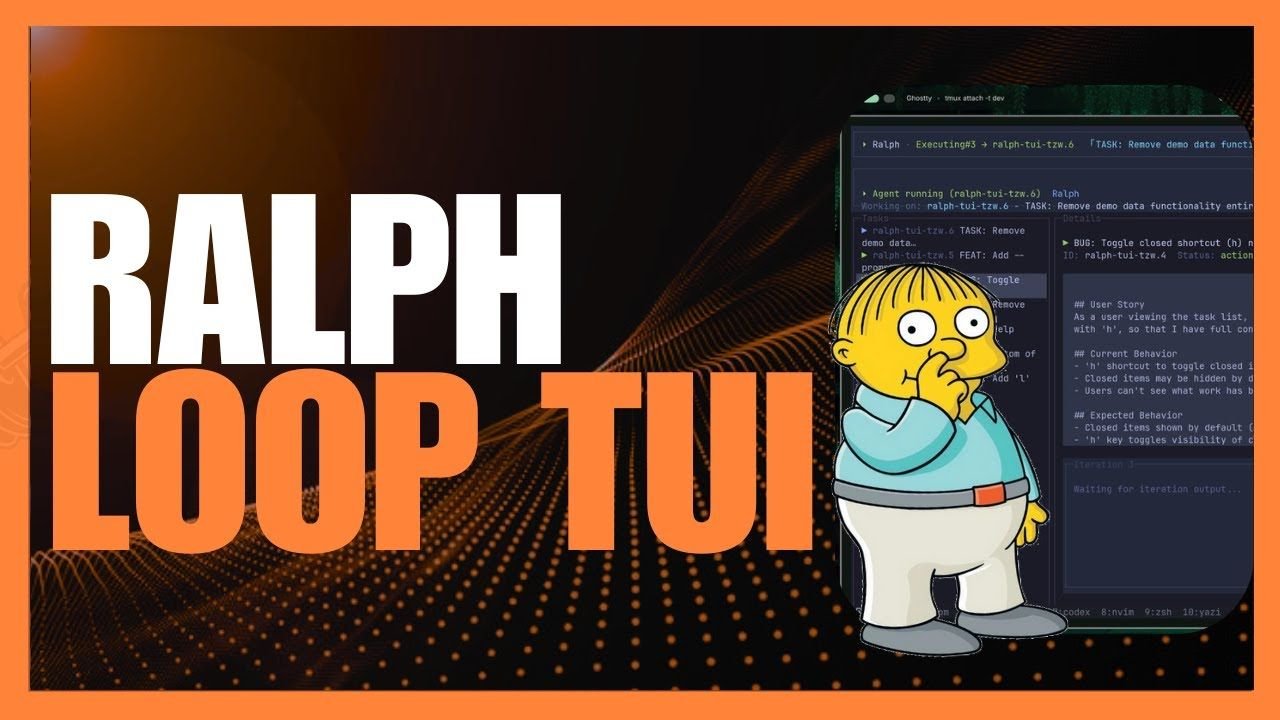
Ralph: Autonomous Coding Loops for Claude
Autonomous coding loops can move fast—but without visibility and control, they can become hard to trust (and easy to run too long). This video walks through how Ralph Loop and the Ralph TUI add structure to long-running agent workflows, so you can track progress and intervene when needed.
Key takeaways
- Covers what Ralph Loop is and how continuous iteration differs from a single-pass run in Claude Code.
- Breaks down why a task tracker and TUI matter as projects grow, including live task status and output streaming.
- Walks through setup: choosing a tracker (e.g., a local PRD JSON file), selecting an agent (Claude Code or OpenCode), and setting iteration limits.
- Demonstrates generating a PRD, turning it into a task list, and running sub-agents with pause/resume and session persistence.
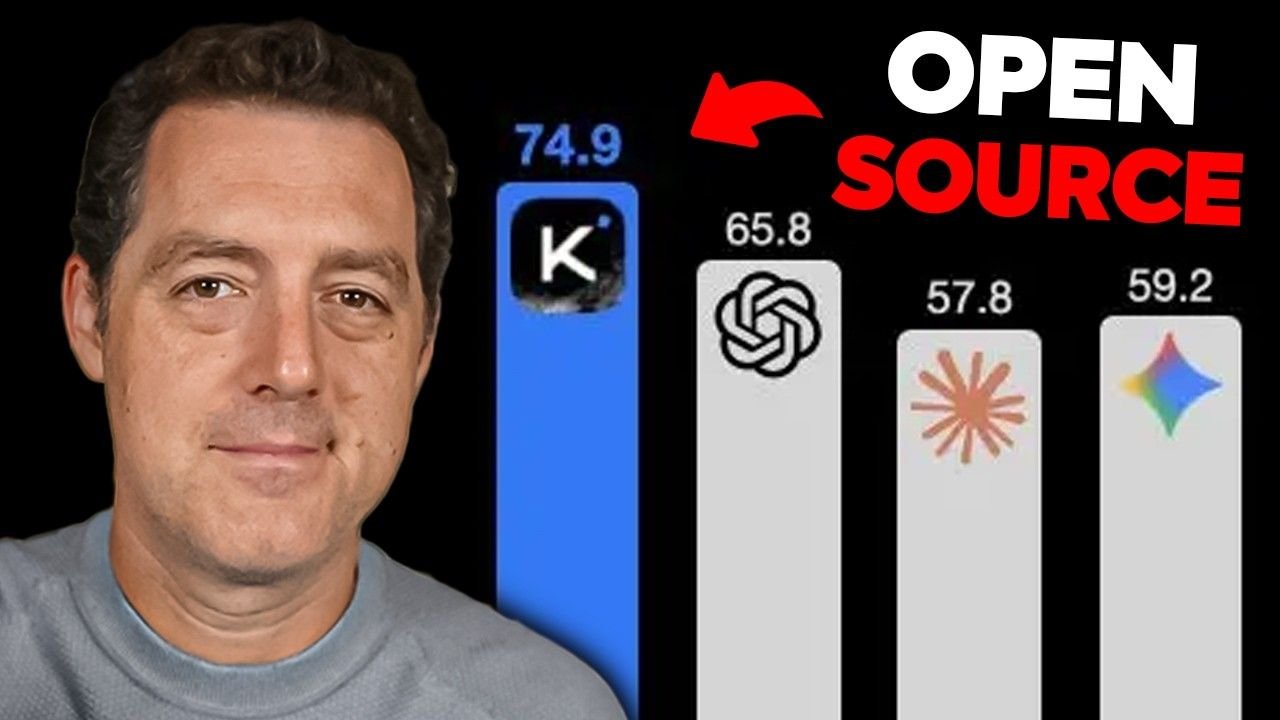
OpenSource Kimi K2.5 just dropped
Open-source weights are back—but for professionals, the real question is whether the latest drop meaningfully improves day-to-day coding, vision work, and agent workflows. This video walks through what Kimi K2.5 claims to deliver, where it benchmarks well, and what it looks like in hands-on demos.
- Breaks down Kimi K2.5’s focus areas: coding, vision tasks, and “self-directed” agent swarms
- Covers benchmark results across agentic, coding, and vision/video evaluations, plus cost vs. performance claims
- Shows practical examples like generating front-end websites and recreating a site from screenshots (no code provided)
- Demonstrates tool-using behavior, including a web-based price comparison and discussion of local runtime/VRAM needs
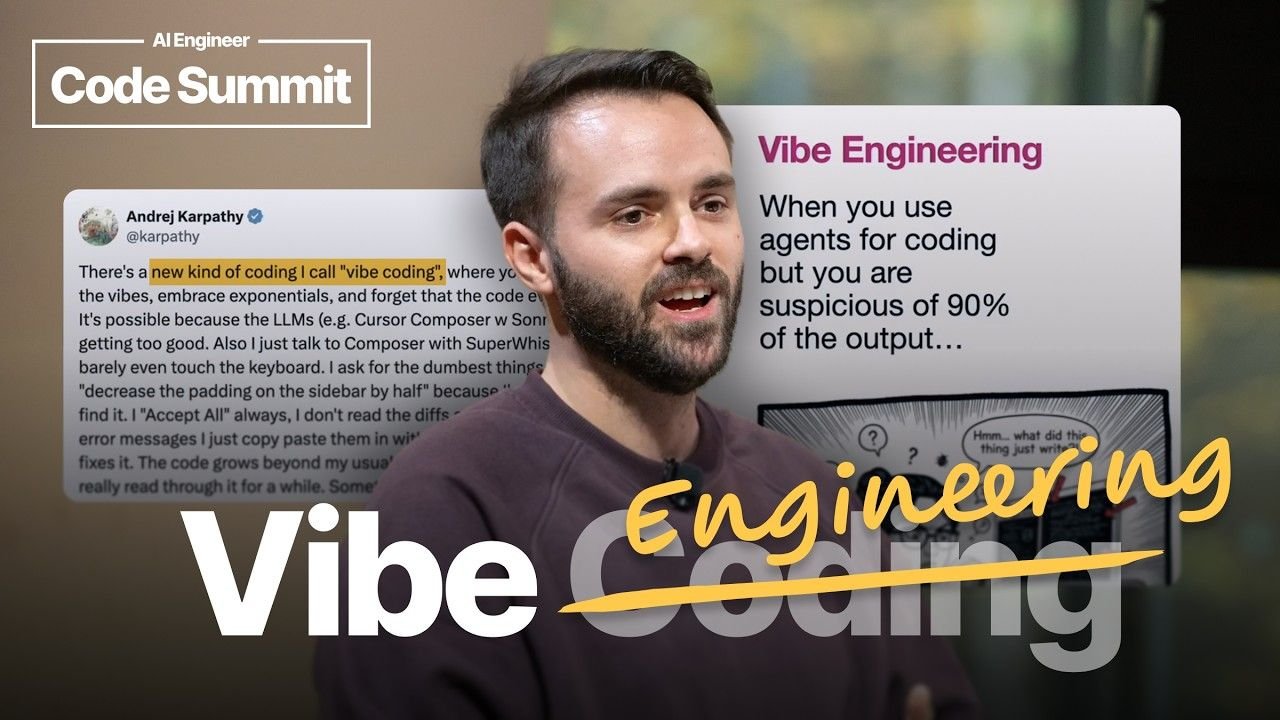
From Vibe Coding To Vibe Engineering
Frontend teams have always ridden hype cycles—but LLMs change the day-to-day work: you can “accept” code fast, and just as quickly land in the wrong abstraction. This talk reframes “vibe coding” into “vibe engineering,” focusing on how professionals can collaborate with AI without losing control of quality, context, and maintainability.
- Breaks down what “vibe coding” means in practice and why the definition keeps shifting
- Contrasts hands-off prompting with “vibe engineering” using agents—plus why you should stay skeptical of generated code
- Shares tactics the speaker uses (e.g., voice-to-code, starting from solid primitives, and supplying rules/docs/memory)
- Covers when vibing is appropriate (one-off scripts, simple features) and when it’s risky for teams and juniors
Researchers solved the Context Window Limit
Context windows cap what you can reliably ask an LLM to reason over—and as inputs grow, “context rot” can make quality drop fast. This video breaks down an MIT paper proposing recursive language models: a way to process arbitrarily long prompts at inference time without changing the core model.
Key takeaways
- Covers why stuffing more tokens into a prompt can degrade retrieval and reasoning, even before hitting the physical limit.
- Walks through the RLM setup: storing the long prompt in a Python/REPL environment and giving the model tools to search it.
- Explains the “recursive” step—re-querying relevant sections to go deeper without summarization or compression.
- Reviews how the approach is evaluated on long-context tasks (e.g., BrowseComp+, Oolong, code repository understanding) and what tradeoffs show up in cost variance.
Building Cursor Composer
Building agentic coding systems often fails on a familiar constraint: you can make them fast, or you can make them smart—but professionals need both to stay in flow. This talk walks through how Cursor built Composer, focusing on the infrastructure, training setup, and evaluations behind a low-latency coding agent model.
- Breaks down the “fast vs. smart” trade-off and why token-generation efficiency matters in real workflows
- Explains the rollout-based RL setup, including how tool calls (read/edit/search/lint/shell) are used and scored
- Covers scaling challenges like bursty compute, consistency between training and production, and load balancing for uneven rollouts
- Shows why matching the production environment—and integrating semantic search—shapes stronger agent behavior (e.g., better search/read before editing)
Spec-Driven Development: Sharpening your AI toolbox
AI coding tools are powerful—but without a solid spec process, delivery can become hard to reproduce and hard to trust. This talk walks through spec-driven development in Kiro and shows how structured artifacts can bring more control and reliability into an AI-assisted workflow.
Key takeaways
- Covers how Kiro turns a prompt into requirements (with acceptance criteria), design, and a task list you can execute.
- Breaks down the EARS format (Easy Approach to Requirements Syntax) and why structured natural language matters for later automation.
- Explains how requirements can be translated into correctness properties for property-based testing, tying specs to code behavior.
- Shows how to use MCP servers across requirements, design, and implementation—and how to customize artifacts (e.g., wireframes, explicit test cases).
Continue the conversation on Slack
Did this article spark your interest? Join our community of experts and enthusiasts to dive deeper, ask questions, and share your ideas.
Join our community